









Table of contents
- What is THP420, and how is it different from THC? ›
- THP420 effects compared to THC ›
- Is THP420 stronger than THC? ›
- Which cannabinoid is stronger than THC? ›
- THP420 legal status and the rules for THC in Germany ›
- THP420 and THC in a drug test ›
- THP420 vs T9HC ›
- THP420 vs HHC ›
- THP420 experiences: what users report ›
- THP420 side effects and what is known about THC ›
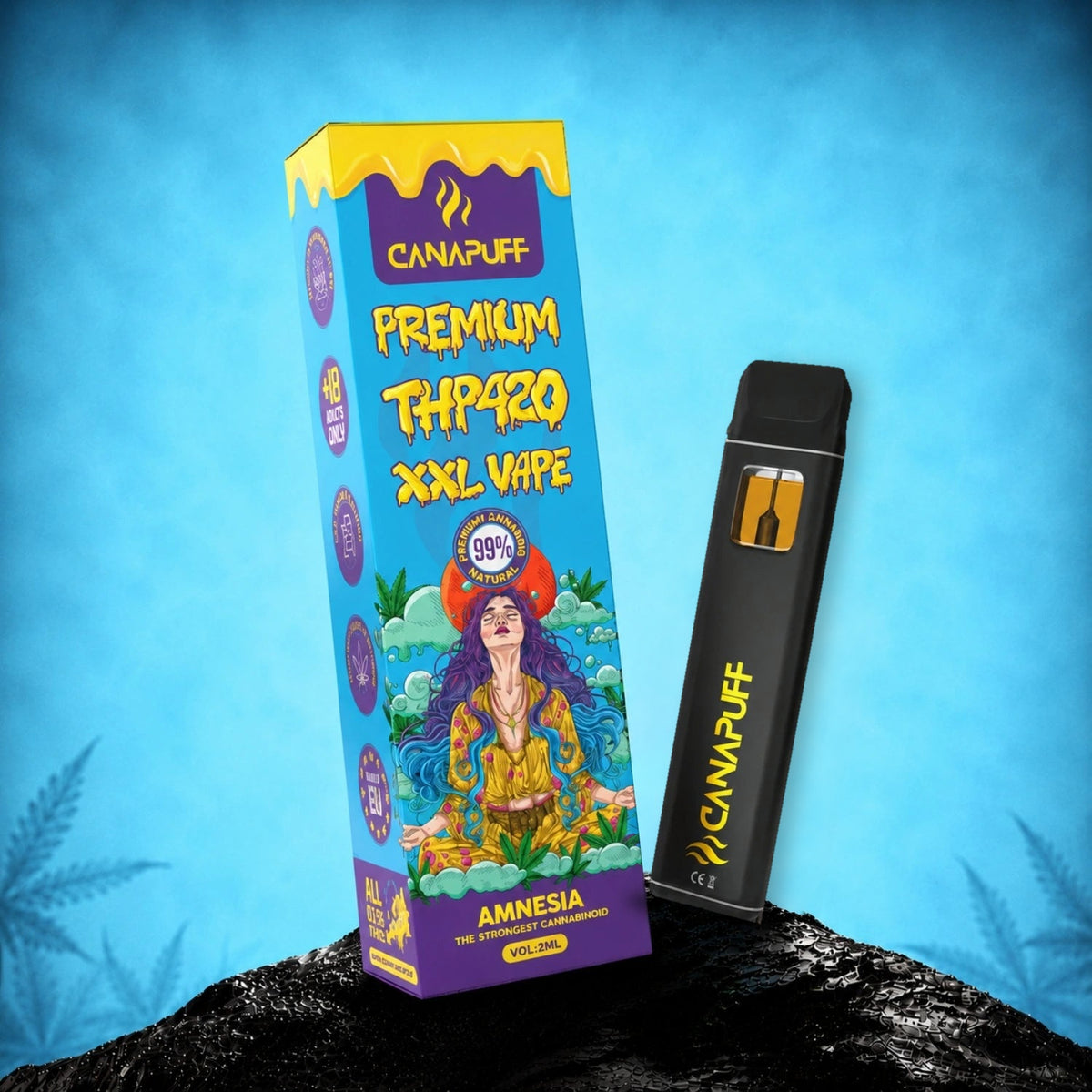
THP420 and THC are two different substances. THC, or delta-9-tetrahydrocannabinol, is the main psychoactive compound of the cannabis plant and has been studied for decades. THP420 is a trade name for a semi-synthetic cannabinoid, and the sellers do not publish which molecule is behind it. Any comparison of the two therefore rests on solid research on one side and on user reports on the other. The declared contents of real products are listed in the THP420 range.
The basics on THP420, from the name to the first lab tests, are in our guide What is THP420. For the comparison with THC, four open questions matter more than the name: what the molecule is, how strong it is, how drug tests react and which rules apply.
Key facts
- THP420 is a market name. A search for "THP420" in the PubMed research database returns no results (21 November 2026).
- Delta-9-THC is regulated in Germany by the Cannabis Act (KCanG), in force since 1 April 2024.
- No study in humans has compared THP420 with THC. Statements about its strength come from user reports.
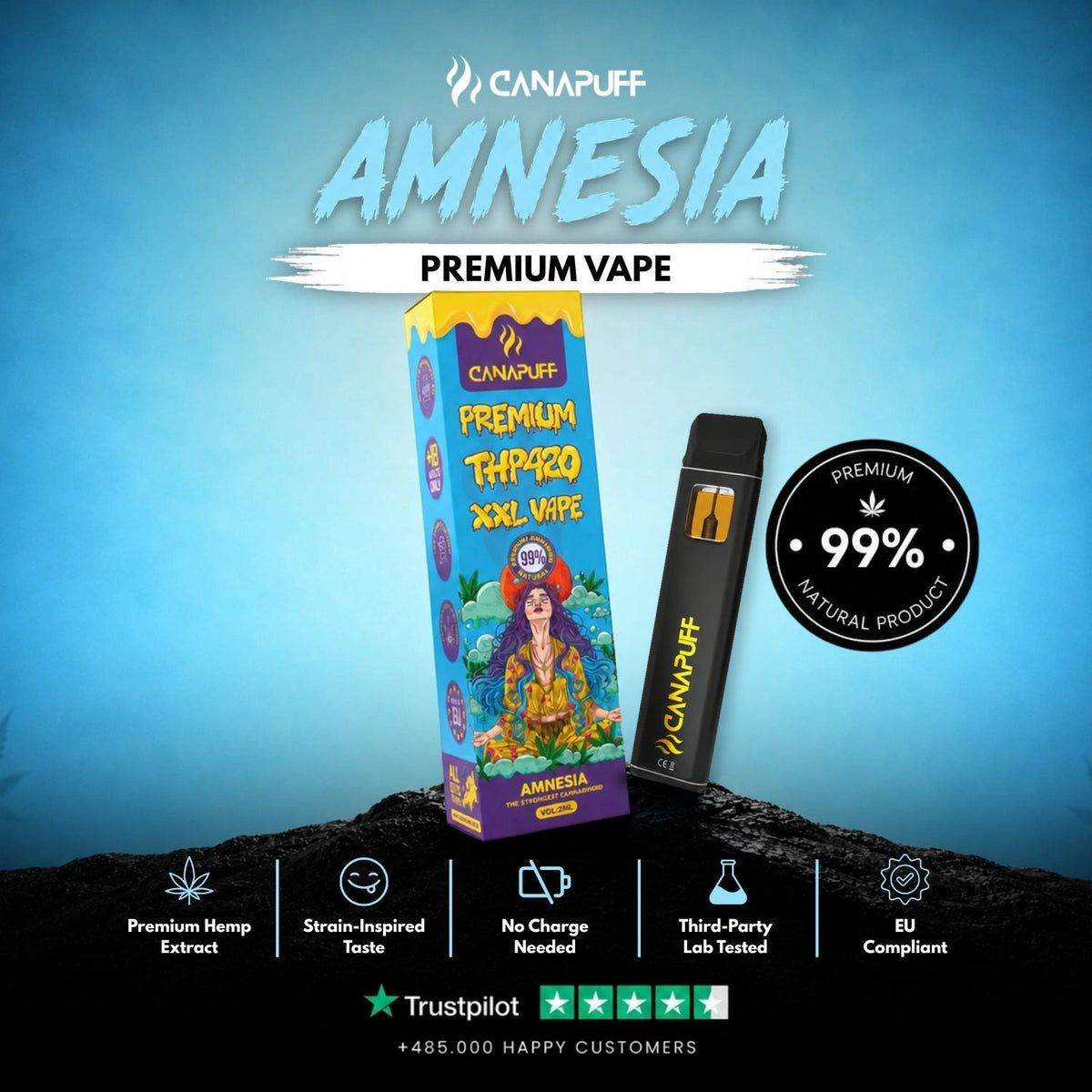
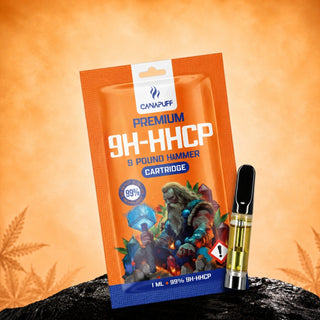
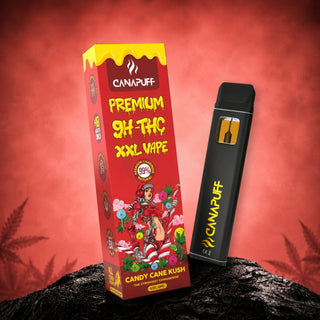
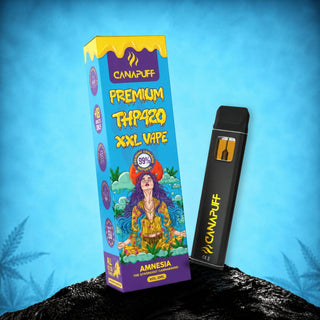
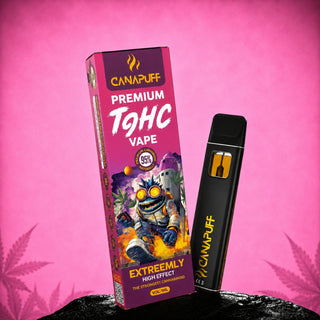
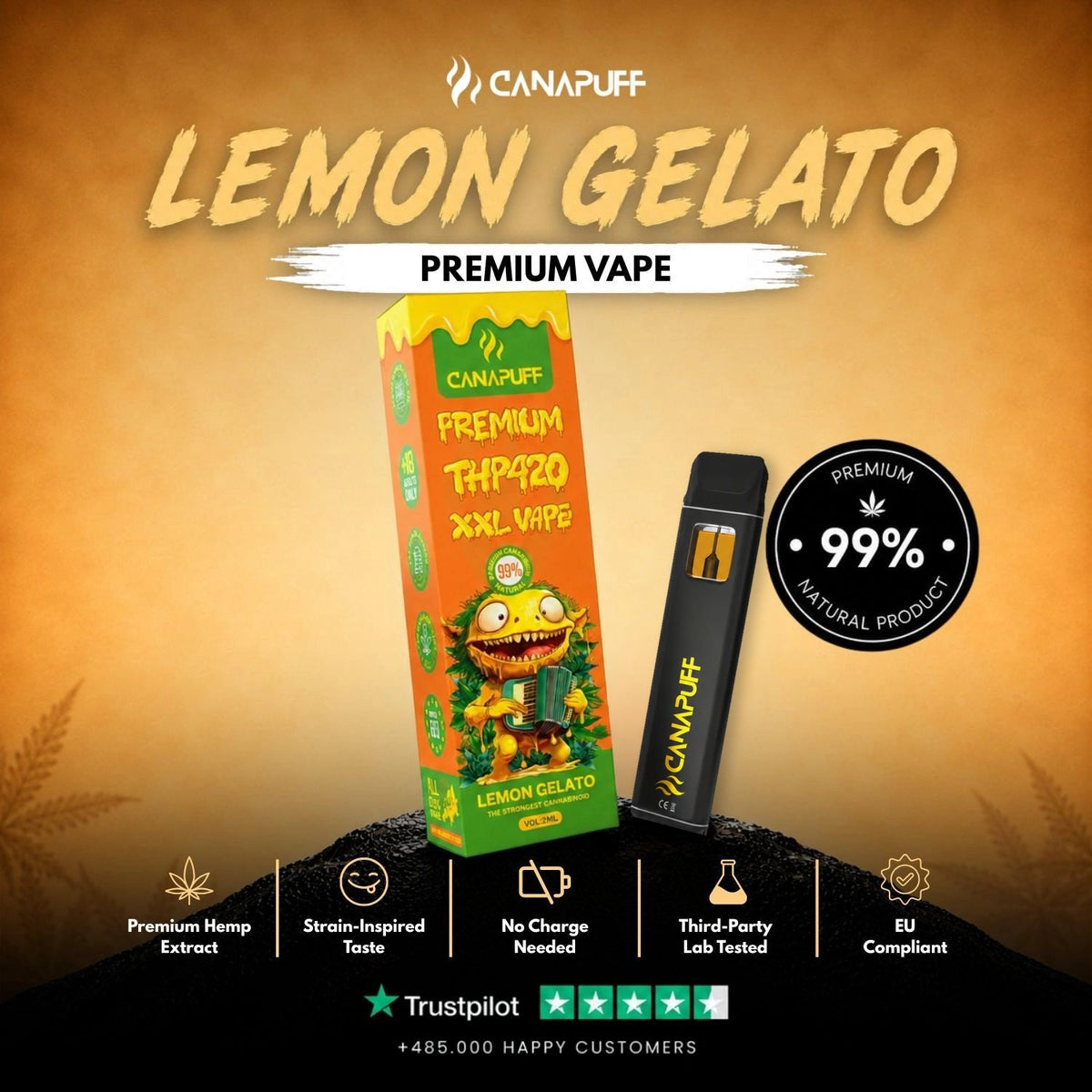
- In the Canapuff range, THP420 appears in flowers (65%), joints (60%), cartridges and disposable vapes (79%), XXL vapes (99%) and liquids with 1,500 mg.
What is THP420, and how is it different from THC?
THP420 is a semi-synthetic cannabinoid sold under a trade name, while delta-9-THC is a natural compound of the cannabis plant. The plant forms THC mainly as its acid precursor THCA, which turns into THC when it is heated. THC can be extracted from the plant, and its structure, effects and metabolism are well documented.
Semi-synthetic cannabinoids follow a different route. Producers usually start with CBD from industrial hemp and convert it into another compound through chemical reactions in a lab. Sellers describe THP420 as a product of this kind, but they do not publish the starting material, the process or the final molecule.
The name gives only a vague hint. "THP" is usually read as tetrahydropyran, which is a ring structure. THC itself contains a pyran ring as part of its core, the dibenzopyran structure. A ring name does not identify one specific substance, so two products labelled THP420 do not necessarily contain the same molecule.
| Aspect | THP420 | Delta-9-THC |
|---|---|---|
| Origin | Made in a lab according to the sellers, process not published | Formed by the cannabis plant, mainly as THCA |
| Chemical identity | Not disclosed | Known and documented |
| Research in humans | No published studies | Decades of clinical and pharmacological research |
| Effects | Known only from user reports | Described in studies |
| Drug tests | Not studied, depends on the molecule | Standard tests look for THC and its metabolites |
| Rules in Germany | Depends on the molecule, the NpSG covers whole substance groups | Cannabis Act (KCanG) and Medical Cannabis Act (MedCanG) |
THP420 effects compared to THC
For THC, the effects are described in research, for THP420 only in user reports. THC binds to the CB1 receptor in the brain as a partial agonist. Studies describe changed perception, relaxation, increased appetite and impaired short-term memory and reaction time. In some people, THC also causes anxiety or a fast heartbeat.
Users describe THP420 in similar terms: relaxed, with altered perception and a noticeable body feeling. Some report that the effect starts faster or feels heavier than with cannabis flowers. Others find it weaker or shorter. These are individual reports about individual products. They are not a promise of any effect, and they depend on the product, the amount, the person and the situation.
Why the comparison stays uncertain
A fair comparison needs the same amount of a known substance, tested on the same people under the same conditions. For THP420, none of this exists. The format adds a second variable. A flower with a declared THP420 content, a vape liquid and an XXL vape with 99% declared content cannot be compared with each other, and even less with natural cannabis.


Is THP420 stronger than THC?
Nobody can say for sure, because no study has measured the potency of THP420. Claims about strength on product pages and in forums are subjective. The percentages in product names state the declared content of a product according to the seller. They describe content, not how strong a product feels, and they cannot be compared with the THC percentage of a cannabis flower.

The THP420 flowers declare 65%, the THP420 vapes 79% or 99%. Two factors explain why reports about strength differ so much. The molecule behind the name may not be the same in every batch or brand. In addition, users compare a vape with their memory of cannabis flowers, which is a different format with a different onset.
Which cannabinoid is stronger than THC?
In laboratory research, THCP is the best-known example: it binds to the CB1 receptor about 33 times more strongly than delta-9-THC. An Italian research team described the compound in 2019 (Citti et al., Scientific Reports). Stronger binding in a lab test does not automatically mean a stronger effect in people. THCP is banned in Germany under the New Psychoactive Substances Act (NpSG).
Fully synthetic cannabinoids, which are sold illegally in herbal mixtures, can bind to the same receptor even more strongly than THC. Many of them activate it completely, while THC activates it only partly. German law lists them as a separate substance group in the NpSG and in the narcotics law.
THP420 legal status and the rules for THC in Germany
We know of no official decision that names THP420. Its status depends on the actual molecule and on national law, and the rules change often. For this reason, no general statement about THP420 is possible, and none is made here.
For THC, the situation in Germany is set out in two laws. The Cannabis Act (KCanG) has regulated possession and private cultivation by adults since 1 April 2024. Commercial sale of cannabis for recreational use is not part of it. Medical cannabis falls under the Medical Cannabis Act (MedCanG) and needs a prescription.
Semi-synthetic cannabinoids fall under a third law, the NpSG. Its current Annex 1 (version of BGBl. 2025 I No. 292) contains a whole group of compounds derived from the dibenzopyran core structure that THC and HHC share (group 2.3). Whether the molecule in a THP420 product falls into this group depends on its exact structure, which the sellers do not disclose. Other countries have their own lists. Our article Is weed legal in Germany summarises the German rules, and the law of the country where you live is what counts.
THP420 and THC in a drug test
Standard drug tests look for THC and its breakdown products, mainly THC-COOH, and nobody has published how they react to THP420. Quick tests based on antibodies (immunoassays) can also react to substances with a similar structure. If a THP420 product contains a THC-like molecule or traces of THC itself, a positive result is possible. Lab confirmation tests with GC-MS or LC-MS identify specific molecules and only flag the substances they are set up to find.
In Germany, driving with 3.5 ng/ml or more of THC in blood serum is an administrative offence under section 24a of the Road Traffic Act (StVG). Driving while impaired by any substance can also be punished under other rules. The ability to drive can be reduced even when no effect is felt any more.
THP420 vs T9HC
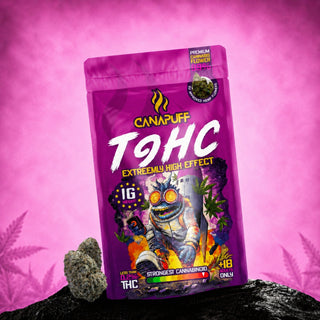
T9HC is another trade name for a semi-synthetic cannabinoid, so the same open questions apply to it as to THP420. Sellers describe T9HC as a compound with a delta-9 type structure, the same arrangement as in natural THC. This leads to the frequent question whether T9HC is like THC. The name points in that direction, but without a published chemical identity and without studies, nobody can confirm that T9HC acts like THC.
Between THP420 and T9HC, the differences lie mostly in the reports and in the product range. In the Canapuff range, T9HC products carry higher declared contents (95 to 99%) than most THP420 products (60 to 79%, with 99% only in the XXL vapes). Users often report T9HC as stronger and longer lasting, but this also rests on reports. Our guide What is T9HC has more detail, and the T9HC range lists the declared content of each product.
THP420 vs HHC
HHC is banned in Germany under the NpSG and in many other European countries. HHC (hexahydrocannabinol) is the best-documented example of a semi-synthetic cannabinoid. It is made from hemp-derived CBD, and its structure is published. It spread quickly in Europe from 2022 onwards, until one country after another added it to its lists of controlled substances.
For THP420, this history matters in two ways. HHC shows that a trade-name cannabinoid can move from open sale to a ban within a short time. It also shows that national lists can cover new compounds through broad group definitions instead of single names. One practical difference remains: the HHC molecule is known, so labs can test for it specifically. THP420 lacks this basis, which makes both quality control and legal assessment harder.
THP420 experiences: what users report
Experience reports on THP420 come from forums and product reviews, and they describe single products, not the substance as such. Recurring topics are the taste of the vapes, the feeling compared with cannabis flowers and the question of what the products actually contain. Positive reports mention relaxation and a THC-like feeling. Critical reports mention restlessness, a racing heart or an effect that felt unpredictable.

Reports like these help with practical questions such as taste, build quality and whether a device works reliably. They say little about the substance, because the writer usually does not know which molecule the product contains and in which amount. A certificate of analysis for the specific batch is the only document that can answer this, so check whether one is available. If you are unsure which product format fits you at all, the Canapuff product finder narrows down the options.


THP420 side effects and what is known about THC
For THC, side effects are documented in studies, for THP420 there is no systematic data. Known effects of THC include dry mouth, red eyes, dizziness, a faster heartbeat and impaired memory and concentration. Some people experience anxiety, panic or, rarely, psychotic symptoms. Regular use over a long period can lead to dependence.
Users of THP420 report similar side effects. The unknown composition adds a further risk. By-products of the chemical conversion, residues of solvents or catalysts and incorrect labels cannot be ruled out without an independent lab report. None of this makes THC free of risk. If side effects are strong or do not pass, contact a doctor or a poison information centre.