






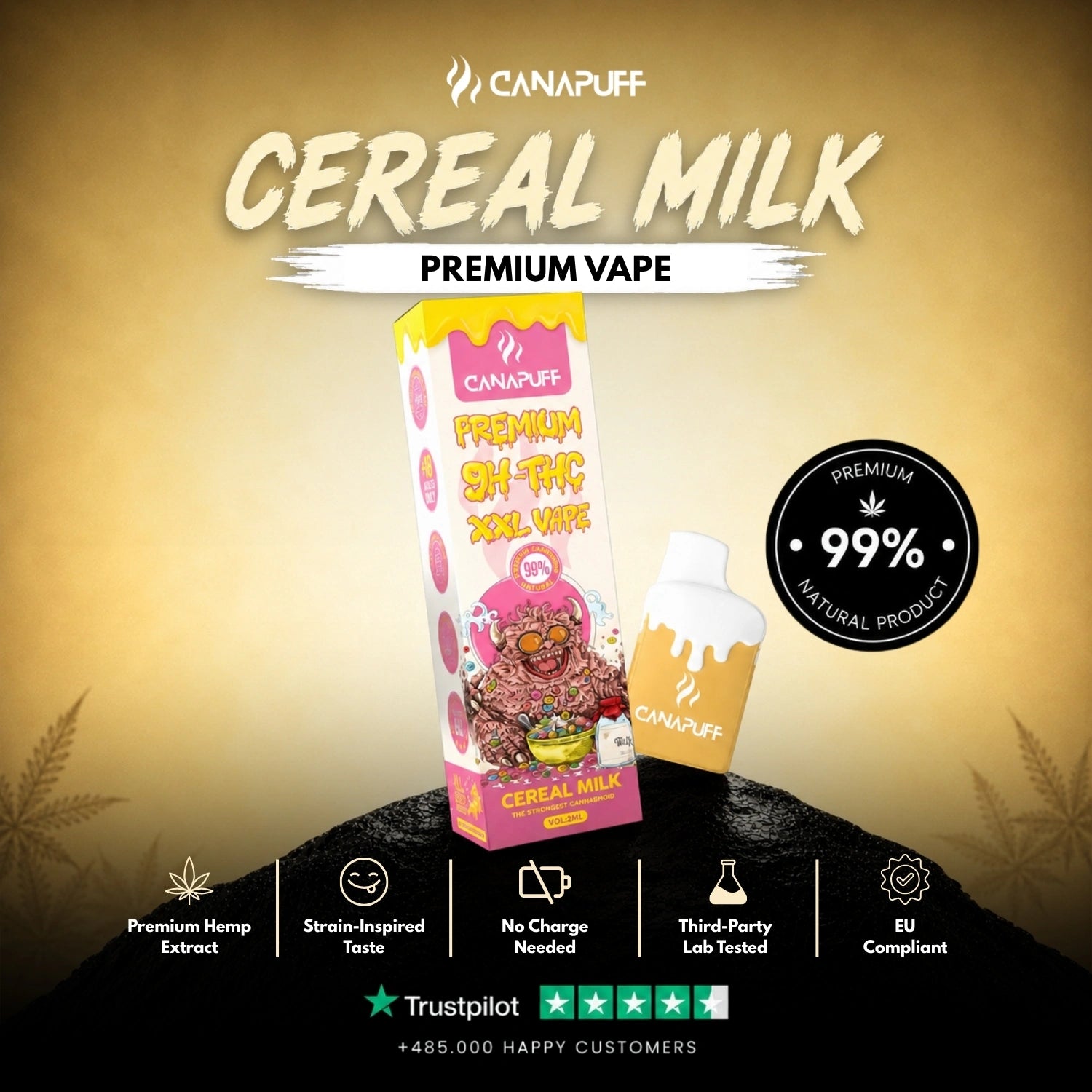










THCP (tetrahydrocannabiphorol) binds to CB1 receptors up to 33 times more effectively than THC in lab studies. People who have tried it describe the effects as roughly 5 to 10 times stronger than THC, not 33 times. Canapuff no longer sells THCP: it was banned in early 2026, and our closest cannabinoid by strength is THP420.
What is THCP?
THCP was identified in 2019 by Italian researchers studying the cannabis strain FM2. Chemically, it is nearly identical to THC, with one difference: its alkyl side chain has seven carbon atoms instead of five. That longer chain lets it fit more precisely into the CB1 receptor, which is why it binds so much more strongly. A detailed breakdown of the discovery is available on PubMed Central.
THCP occurs naturally in cannabis, but only in trace amounts, around 0.0029% of the plant's weight. That is far too little to extract at scale, so nearly all THCP sold before it was banned was made in a lab from hemp-derived cannabinoids rather than pulled directly from cannabis flower.
THCP vs THC: how much stronger is it really?
Binding affinity and felt effect are not the same thing, and the gap between them is the most misunderstood part of THCP.
| Parameter | Delta-9 THC | THCP |
|---|---|---|
| Alkyl side chain length | 5 carbons | 7 carbons |
| CB1 receptor binding (Ki) | ~40 nM | ~1.2 nM (about 33x stronger binding) |
| Subjective intensity reported by users | Baseline | Roughly 5 to 10x stronger |
The 33x figure describes how tightly THCP locks onto the CB1 receptor in a lab assay, not how strong the high feels. Dosage, delivery method, and individual metabolism all affect the subjective result just as much as receptor binding does. That is why the reported experience lands closer to 5 to 10 times stronger rather than 33 times.
How long do the effects last?
THCP's higher potency affects intensity more than duration. As with other cannabinoids, how long it lasts depends mainly on the format: inhaled products (vapes, flower) tend to peak within minutes and fade over a few hours, while edibles take longer to start and can last considerably longer. There is not yet enough independent research specific to THCP to give a precise duration figure.
Possible side effects
- Dry mouth
- Dizziness or temporary disorientation
- Short-term difficulty concentrating
- Anxiety or unease, more likely at higher doses or in sensitive users
Because THCP is more potent than THC, these effects can appear at doses that would feel mild with regular THC products.
Is THCP legal?
The legal status of THCP varies by country and changes quickly, since it falls into newer, less-regulated categories than THC or CBD. Rules differ depending on how the product is derived and the market it is sold in. Canapuff no longer offers THCP products: it was banned in early 2026, and we removed it from our range at that point.
For more on where THCP fits among other cannabinoids, see our THCP overview or explore THP420, our strongest current line.