









Phoenix Tears Tincture Explained: What It Is, How It Is Made and What Research Shows

Phoenix Tears Tincture: Unveiling the Myths, Hopes, and Scientific Realities
Phoenix Tears tincture is a name that appears often in online discussions about cannabis extracts. Many of these discussions contain strong claims that are not supported by research. This article explains what Phoenix Tears is, how it is made, what it contains and what the current research does and does not show. The goal is a balanced, factual overview of this concentrated cannabis extract. We look at what Phoenix Tears tincture is, how it is produced and what science says about the claims that are made about it, in particular the claims about cancer. We also cover its chemical composition, the different ways it is used, its risks and the open research questions. The aim is to give you facts, so you can read other sources about Phoenix Tears with a critical eye.

My Journey into the World of Phoenix Tears: Why I Dived Deep

Most people first hear about Phoenix Tears through personal stories. The name is memorable: it refers to the mythical phoenix that rises from the ashes. This imagery has helped the extract gain a reputation that goes far beyond what research can confirm. For some people, Phoenix Tears has become a symbol of hope in very difficult situations, which makes a careful and honest look at the facts even more important. Behind the stories, there are simple questions: What is this tincture? What does it contain? What do studies show? When we looked at the available information, we found strong online advocacy, clear caution from scientists and a large need for more research. This article summarises the available information for anyone who asks the same questions.

What Exactly is Phoenix Tears Tincture? Demystifying the Basics

Before we discuss the research, let us establish what Phoenix Tears tincture is. Its origin and its production method explain why it is so concentrated and why it is discussed so much.

From Legend to Lab: The Origins of the Name and Concept

The name "Phoenix Tears" is poetic, but in technical terms Phoenix Tears is a highly concentrated cannabis oil. It is also widely known as Rick Simpson Oil (RSO), named after Rick Simpson, a Canadian cannabis activist who developed his own extraction method and promoted the oil based on his personal story. These personal claims have not been confirmed by scientific studies. In simple terms, Phoenix Tears is a specific type of concentrated, full-spectrum cannabis extract.

The Making of a Potent Extract: How Phoenix Tears is Produced

Phoenix Tears tincture is fundamentally a resinous substance extracted from Cannabis sativa or Cannabis indica plants, typically from the potent flower buds. The production process is designed to concentrate the plant's active compounds, primarily cannabinoids, into a thick, dark oil. The most common method uses a solvent, often isopropyl alcohol or ethanol, to dissolve the cannabinoids from the plant material. After the plant matter has soaked in the solvent, the solvent is evaporated. What remains is a thick, highly concentrated oil that contains cannabinoids such as THC and CBD, as well as other plant compounds such as terpenes and flavonoids. If the solvent is not removed completely, residues can remain in the oil. The quality and specific chemical profile of the final Phoenix Tears product can vary significantly. This depends on several factors: Cannabis Strain: Different strains of cannabis have different cannabinoid and terpene profiles. The choice of strain changes the composition of the final oil and the amount of oil that can be extracted. Quality of Plant Material: The condition and maturity of the cannabis plants, and how they were grown and harvested, play an important role. Extraction Procedure: The specific solvent used, the duration of the soak, and the thoroughness of the purging process all impact the final concentration and purity of the oil. The aim is to maximize the extraction of desirable compounds while minimizing the presence of unwanted substances like chlorophyll or residual solvent. The intricacies of such extraction processes and the factors influencing product quality are subjects of ongoing research, as highlighted in studies such as those by CSIRO which delve into cannabis preparations. This concentration is what sets Phoenix Tears apart from simply smoking cannabis or using less potent tinctures. It's designed to deliver a powerful dose of cannabinoids.

The Power Within: Understanding the Chemical Composition of Phoenix Tears

The cannabis plant produces more than 500 distinct compounds. Among these, cannabinoids, flavonoids and terpenoids are the most studied. Phoenix Tears, as a concentrated extract, aims to keep a broad spectrum of these compounds.

Cannabinoids 101: THC and CBD in the Spotlight

When people talk about cannabis, they mainly refer to cannabinoids. Two of the best known and most abundant cannabinoids are: Delta-9-tetrahydrocannabinol (THC): This is the main psychoactive compound in cannabis. THC changes perception and can impair concentration and reaction time. In Phoenix Tears, THC is usually present in very high concentrations and often forms the largest part of the cannabinoid content. THC is regulated as a controlled substance in many countries. Cannabidiol (CBD): Unlike THC, CBD is not considered intoxicating. CBD is the subject of a lot of research, but research is limited and no health claims can be made for CBD products. Traditional RSO recipes often used plants with a high THC content. Some modern preparations also contain more CBD, so the ratio of THC to CBD can differ a lot between products. The high concentration of these active constituents in Phoenix Tears is what makes it notably more potent than traditional cannabis preparations like dried flower.

Beyond THC and CBD: The Entourage Theory

While THC and CBD often steal the limelight, they don't work in isolation. The cannabis plant contains dozens of other minor cannabinoids (like CBG, CBN, THCA) and aromatic compounds called terpenes (which give different strains their unique smells and flavors, like limonene, myrcene, and pinene). Some researchers discuss the so-called "entourage effect". This theory suggests that cannabinoids, terpenes and flavonoids interact with each other. The theory is debated, and the evidence is not conclusive. A full-spectrum extract like Phoenix Tears keeps many of these compounds together. This is a key difference from isolates, which contain only THC or only CBD. To give you a clearer picture, here's a quick comparison of THC and CBD:

Table 1: THC vs. CBD at a Glance

Feature THC (Tetrahydrocannabinol) CBD (Cannabidiol) Psychoactivity Yes No, or very low Primary Receptor(s) Primarily CB1 receptors (in brain & nervous system) Interacts with multiple receptors, often indirectly Research status Studied in research; regulated as a controlled substance in many countries Studied in research; research is limited and no health claims can be made In Phoenix Tears Typically very high concentration Concentration can vary; often present in full-spectrum Regulation Highly regulated; illegal in many places Less regulated than THC; rules vary by country and can change

Phoenix Tears and Cancer Claims: What Is Known

The most discussed and most controversial claim about Phoenix Tears tincture concerns cancer. This is the area where online claims and the current state of scientific evidence are furthest apart.

The Claims Made About Phoenix Tears

Proponents of Phoenix Tears, including Rick Simpson himself, claim that high concentrations of cannabinoids can act against cancer cells. These claims are usually based on laboratory ideas such as: Apoptosis: programmed cell death, which is studied in cell cultures. Cell growth: the division of cells, which is studied in laboratory models. Angiogenesis: the formation of new blood vessels, which is studied in laboratory models. Metastasis: the spread of cells to other parts of the body, which is studied in laboratory models. The theoretical basis for these claims is the interaction of cannabinoids with the endocannabinoid system, in particular the CB1 and CB2 receptors. These receptors are found on many types of cells. Laboratory results of this kind cannot be transferred directly to people.

Sifting Through the Science: What Does Current Research Actually Say?

This is where things become complicated. There is no reliable scientific evidence that Phoenix Tears tincture works against cancer in humans. Most of the claims are based on personal stories. Here's what my research has uncovered: Preclinical Studies (Lab and Animal): Some studies have looked at cannabinoids in vitro (in test tubes, on isolated cells) and in vivo (in animals). Results from cell cultures and animals often do not repeat in humans, so these studies do not show that a product works for people. Human Studies: This is the most important missing piece. There are no large, well-designed human studies on Phoenix Tears or RSO for cancer. One small early study, which is often mentioned, used purified THC and not the full-spectrum oil. Its main goal was to check tolerability, not to show a result. Complexity of Cancer: Cancer is not a single condition. It is a group of many different conditions with different characteristics. A result in a petri dish does not show what happens in the human body. Possible Risks: Some research suggests that under certain circumstances cannabinoids might interfere with established cancer care. This is one more reason why the topic needs careful research and why nobody should rely on online claims. Turning laboratory results into reliable knowledge about people is a long and difficult process. Personal stories can be moving, but they do not replace scientific studies. Reviews such as the one found on publish.csiro.au show that the scientific community agrees that more research is needed, in particular human studies. Research is limited; no health claims can be made.

Navigating Anecdotes and Scientific Rigor

There are many personal stories about Phoenix Tears online. Some describe positive experiences, others describe disappointment or unwanted reactions. It is understandable that people in a difficult situation look for hope, but personal stories cannot show whether a product works. It is important to separate personal experiences from scientific proof. The lack of evidence is not a judgement of people's experiences. It means that the necessary studies have not been done. Only such studies could show for whom a product might be suitable and with which risks. Until then, Phoenix Tears remains an unproven product.

Other Claims About Phoenix Tears and the Evidence

Online, Phoenix Tears is also linked to many other conditions. These claims are mostly based on general research on THC and CBD, not on research on Phoenix Tears itself: Research on THC: THC is the subject of many studies, but these studies used defined preparations and doses, not RSO. Research on CBD: CBD is also widely studied. Research is limited, and no health claims can be made for CBD products. Approved preparations: In some countries, a few specific cannabinoid preparations are approved as pharmaceuticals for narrowly defined uses. These are standardised products and are not comparable with homemade or unregulated oils. Terpenes: Some discussions mention terpenes such as myrcene. Research on terpenes in cannabis extracts is at an early stage. Psychological reactions: Products with a high THC content can cause unpleasant reactions such as nervousness or paranoia in some people. It is important to remember that Phoenix Tears is a preparation with a very high THC content. This makes it very different from a CBD oil. Research on cannabinoids usually uses other ratios or isolated compounds, not high-THC RSO. Studies on Phoenix Tears itself are lacking.

Using Phoenix Tears: Administration Methods and What to Expect

To understand Phoenix Tears, it also helps to know how it is typically used and which reactions are described.

How is Phoenix Tears Taken?

Because it's a thick, sticky oil, Phoenix Tears can be administered in several ways: Oral (Ingestion): This is the most common method. The oil can be swallowed directly, placed under the tongue or added to food or capsules. Because of its high concentration, very small amounts are used. When swallowed, the onset is slower (30 minutes to 2 hours) and the duration is longer. Vaporization: Some people vaporize the oil. This requires specific equipment and can be harsh because of the concentration. The onset is much faster (within minutes). Topical: The oil can be applied to the skin, often mixed with a carrier oil such as coconut oil. Absorption into the bloodstream is generally low with this method. Suppositories: Rectal administration is another option, which can lead to higher bioavailability as it bypasses some of the first-pass metabolism in the liver. The method of use affects how fast and how long THC acts in the body.

Table 2: Administration Methods for Phoenix Tears Tincture

Method Absorption Speed Considerations Oral (Ingestion) Slow to Moderate Delayed onset (30min-2hrs), longer duration, subject to first-pass liver metabolism Sublingual Moderate Faster onset than ingestion, bypasses some liver metabolism Vaporization Fast Fast onset (minutes), possible lung irritation, requires specific equipment Topical Localized, Slow Applied to the skin, low absorption into the bloodstream Suppositories Moderate to Fast Bypasses liver metabolism, potentially higher and more consistent bioavailability

Possible Physiological Reactions to Phoenix Tears

Because of its high THC content, Phoenix Tears can cause strong physical and psychoactive reactions. These can include: Psychological reactions: altered perception, impaired memory and concentration, and in some cases nervousness or paranoia, especially with large amounts or in inexperienced users. Physical reactions: drowsiness, dizziness, fatigue, dry mouth, red eyes, increased heart rate (tachycardia), a possible drop in blood pressure (hypotension) and slower digestion. Some people report that they become less sensitive to these reactions with regular use. This is called tolerance. Tolerance is not a reason to increase the amount without care, and it does not reduce the risk of impairment.

Risks and Considerations of Phoenix Tears

Supporters often point out that Phoenix Tears comes from a plant. However, "natural" does not mean free of risk. Knowing the possible risks is very important.

Risk Profile of Phoenix Tears: What the Data Suggests

Scientific reviews describe the acute toxicity of cannabinoids as low. Animal studies suggest that a lethal dose would require an extremely large amount. Reported unwanted reactions in cannabinoid studies were often fatigue and dizziness, as noted in some scientific reviews (see CSIRO research). Low acute toxicity does not mean that a product is free of risk. The high THC content of Phoenix Tears means that the risk of strong acute reactions is significant, especially for new users or with large amounts.

Who Should Be Cautious? Contraindications and At-Risk Populations

Certain individuals should exercise particular caution or avoid Phoenix Tears tincture entirely: History of Psychosis: THC can trigger or worsen psychotic episodes in people with a predisposition, for example to schizophrenia. Cardiovascular Issues: THC can cause a temporary increase in heart rate and affect blood pressure, which could be risky for those with unstable heart conditions. Pregnancy and Breastfeeding: Cannabis use during pregnancy and breastfeeding is strongly discouraged due to potential risks to fetal and infant development. Children and Adolescents: The developing brain is particularly vulnerable to THC. Phoenix Tears is not suitable for people under 18. Individuals Planning to Start a Family: This is also listed as a contraindication in some research.

The Psychoactive Factor: THC in Phoenix Tears and Daily Life

The psychoactive action of the THC in Phoenix Tears is strong. It can significantly impair: Cognitive Function: Memory, attention, problem-solving. Motor Coordination: Balance, reaction time. Decision-Making Capabilities. This means that activities that need alertness and coordination, such as driving, operating machinery or caring for others, can become dangerous after using Phoenix Tears. This impairment can last for several hours.

Potential Drug Interactions: A Known Unknown

There is a lot of uncertainty about how Phoenix Tears interacts with other substances and pharmaceuticals. Because there are few human studies, data on interactions is limited. Based on the known pharmacology of cannabinoids, several possible interactions are discussed, a point also highlighted in this study: Increased drowsiness: When combined with other substances that cause drowsiness (for example alcohol, sedatives, opiates or some antihistamines), the drowsiness can increase in a dangerous way. Heart rate and blood pressure: THC can change heart rate and blood pressure, which matters when other substances with similar actions are taken at the same time. Liver enzymes: Cannabinoids, in particular CBD, can affect the CYP450 enzyme system in the liver. This system breaks down many common pharmaceuticals. An interaction can change the levels of other substances in the body. A known interaction exists, for example, between dronabinol (synthetic THC) and ritonavir. Anyone who takes other pharmaceuticals should talk to a doctor or pharmacist about possible interactions.

The Path Forward: The Critical Need for More Research

Our research showed one clear point: there is a large need for more high-quality human studies. Laboratory studies and personal stories are not enough to show that Phoenix Tears is suitable for any specific purpose. Several factors hinder our current understanding: Regulatory hurdles: In many parts of the world, cannabis research has been limited by strict rules. This is slowly changing in some countries. Complexity of Cannabinoid Science: The interactions between dozens of cannabinoids and terpenes with the human endocannabinoid system are incredibly complex and still not fully understood. Variability of Products: Lack of standardization in RSO/Phoenix Tears production means product consistency can be a major issue, making research difficult. Long-term questions: It is not known how regular use of highly concentrated extracts affects the body over long periods. Future research needs well-designed studies to: Clarify risks and possible uses for specific purposes. Understand the mechanisms of action in the human body. Determine optimal dosing strategies and cannabinoid profiles. Identify which groups of people have a higher risk. Investigate long-term consequences and possible interactions with other substances. Researchers in the field strongly support this call for more research (further reading at CSIRO).

My Personal Takeaway: A Balanced Perspective on Phoenix Tears

Looking at the available information on Phoenix Tears shows a topic where human hope, self-experimentation and the slow pace of science meet. It is understandable that people look at options like Phoenix Tears in difficult situations. Personal stories can be powerful, but they are not scientific data. At the same time, evidence matters. The current scientific basis for Phoenix Tears is not strong enough to support the claims that circulate online, in particular the claims about cancer. Phoenix Tears is not a proven solution, and presenting it as one is misleading and can be risky. Our conclusion is one of caution: research on cannabinoids continues, but Phoenix Tears should not be seen as a solution for any condition without scientific evidence.

Conclusion: Where Do We Go From Here with Phoenix Tears?

Phoenix Tears tincture is a concentrated cannabis oil extract that has received a lot of attention because of claims about cancer and other conditions. These claims are promoted by passionate advocates, but they are not confirmed by reliable human studies. Here are the key takeaways from my research: Potent Concentration: Phoenix Tears contains high levels of cannabinoids, primarily THC, making it significantly stronger than most other cannabis products. Laboratory Data Only: Some laboratory and animal studies have looked at cannabinoids, but these results cannot be transferred to people. No Robust Evidence in Humans: There are no large human studies on Phoenix Tears. Research is limited; no health claims can be made. Significant Risks: The high THC content carries risks of strong psychoactive reactions, impairment and possible interactions with other substances. It is not suitable for everyone. Professional Advice: Do not use Phoenix Tears in place of established care for serious conditions. Consult a doctor before you make any decision, because self-experimentation can be dangerous and can delay proven care. So, what's the call to action? Talk to a Doctor: If you or a loved one are thinking about Phoenix Tears, speak with a qualified doctor about the possible risks. Do not stop established care without their advice. Seek Reputable Information: Be critical of sources. Look for information grounded in scientific research rather than solely on anecdotal claims or forums. Support Research: The only way to understand Phoenix Tears and other cannabis extracts is careful, independent scientific research. Know the Risks: Be aware of the high concentration of Phoenix Tears, the limited scientific evidence and the possible risks. Check the local rules in your country, because THC products are controlled in many places. Phoenix Tears tincture remains a complex topic. It shows the gap between online claims and scientific evidence. We hope that continued research will bring clear answers. Disclaimer: This article is based on research of available information and is for informational purposes only. It is not medical advice. Always consult a qualified doctor for any questions about your health.
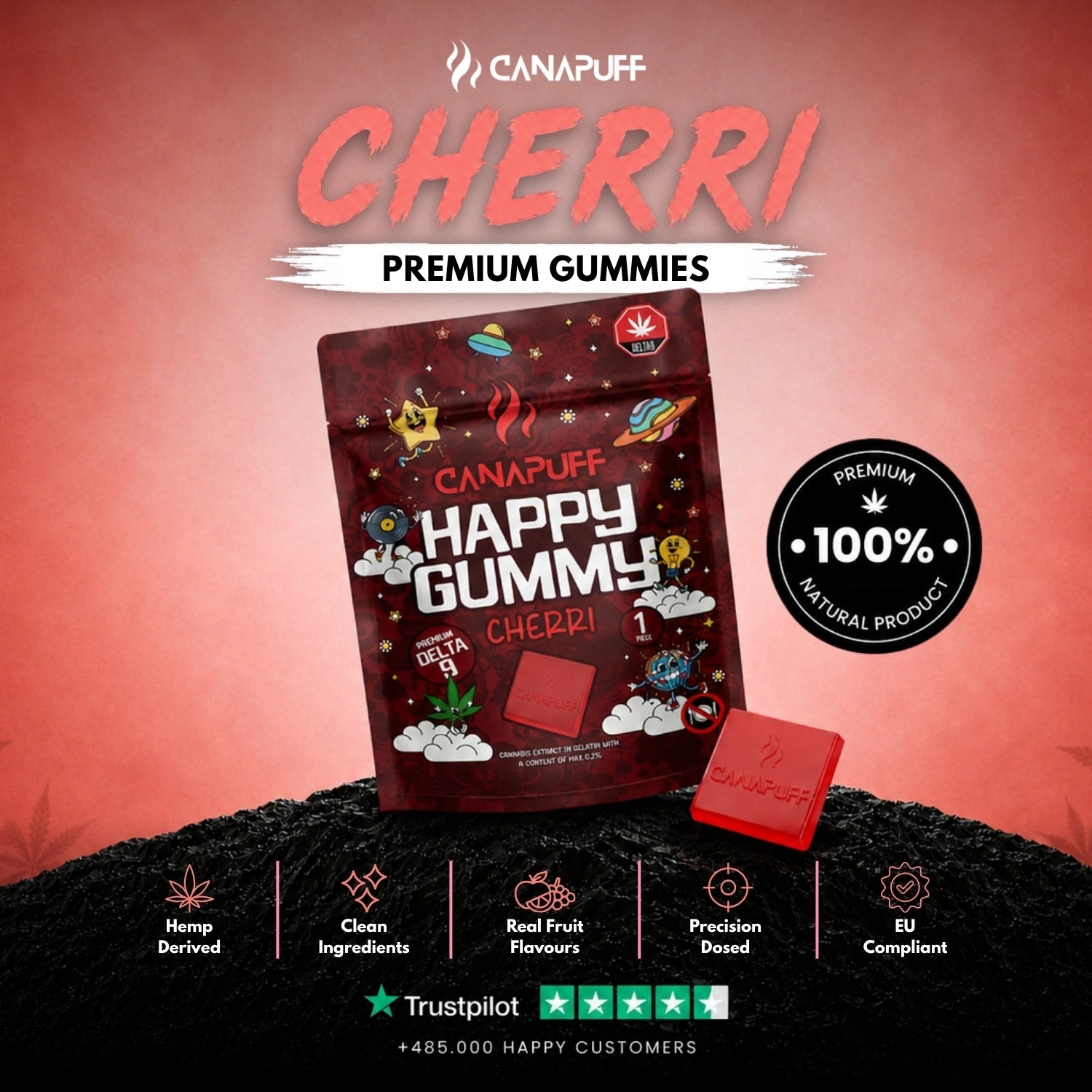
Canapuff Happy Gummy Delta-9 Cherri, 1 piece hemp-derived gummy

Delta 9 Gummy Cherri

Ideal for beginners

Try it now