























Table of contents
- What Are Cannabinoids and Where Do They Come From? ›
- How Do Cannabinoids Interact with the Human Body? ›
- What Are the Major Cannabinoids? ›
- What Are Minor and Other Cannabinoids? ›
- What Does Research Say About Cannabinoids? ›
- Are There Risks Associated with Cannabis Use? ›
- How Do the Main Cannabinoids Compare? ›
- How Do International Drug Treaties Affect Cannabis Research? ›
- Conclusion: Understanding the Difference Between Cannabinoids ›
- Works Cited ›
Cannabinoids are natural compounds found in the cannabis plant. They interact with receptors in the human body in different ways. For many people, understanding the difference between cannabinoids is confusing, because there are so many types, both natural and synthetic. This guide gives a factual overview.
This article explains where cannabinoids come from, how they interact with the body's receptors, how the major and minor cannabinoids differ and how they are regulated. It also explains what research can and cannot say about them today.
What Are Cannabinoids and Where Do They Come From?
Cannabinoids are chemical compounds that the cannabis plant produces naturally. These compounds interact with the body's endocannabinoid system, a signalling network that researchers study for its role in many bodily processes.
What Is the Cannabis Sativa Plant?
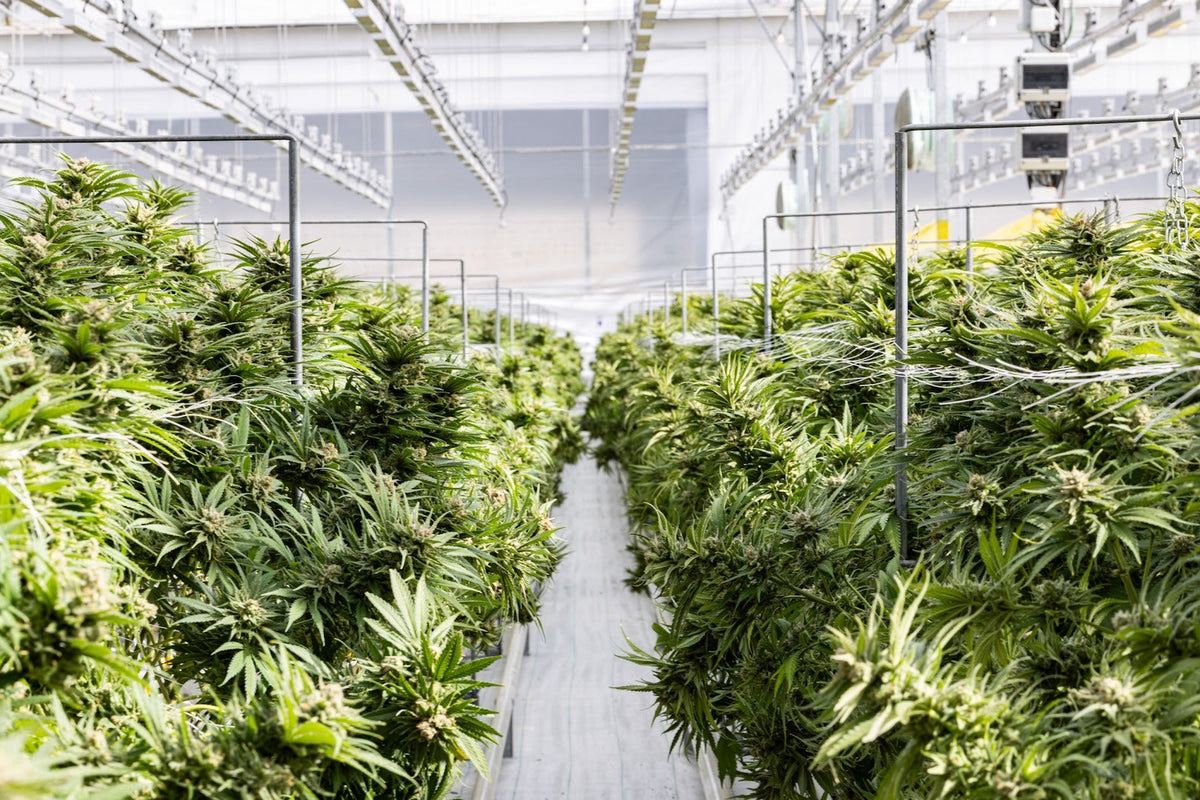
The cannabis sativa plant is one of the best known sources of cannabinoids. Depending on the strain, it can contain psychoactive and non-psychoactive cannabinoids. Different cannabis strains contain different levels of cannabinoids such as CBD and THC.
What About Synthetic Cannabinoids?
Besides natural cannabinoids, scientists have also developed synthetic compounds known as synthetic cannabinoids. Some of them are approved pharmaceuticals for narrowly defined uses. Others are sold illegally and can be very dangerous, because their strength and composition are unknown.
How Do Cannabinoids Interact with the Human Body?
The human body contains cannabinoid receptors, mainly CB1 and CB2 receptors, which are part of the endocannabinoid system. These receptors are found in the central nervous system, the peripheral nervous system and many other tissues.
How Do CB1 and CB2 Receptors Work?
- CB1 receptors: Mainly found in the central nervous system. THC binds to these receptors, which explains why it is psychoactive.
- CB2 receptors: Mainly found outside the brain, for example in the peripheral nervous system and in many other cells.
Each cannabinoid binds to these receptors in a different way. This is the main reason why cannabinoids differ from each other.
What Are the Major Cannabinoids?
Among the major cannabinoids, THC and CBD are the most studied and best known. However, there are many minor cannabinoids, which are present in smaller amounts.
THC (Tetrahydrocannabinol)
THC is the main psychoactive compound in cannabis. It binds strongly to CB1 receptors in the brain and changes perception and cognition.
- Characteristic: Psychoactive; changes perception and can impair concentration and reaction time
- Regulation: Controlled substance in many countries
- Risks: Possible psychological problems and dependence with heavy use
You can see products with different cannabinoids in Canapuff's Psychoactive Collection. Check the rules in your country before you order.
CBD (Cannabidiol)
CBD is not considered intoxicating, which means it does not change perception like THC. CBD is one of the most studied cannabinoids, but research is limited and no health claims can be made for CBD products.
- Characteristic: Not considered intoxicating
- Research: Many studies, but most are small or use specific pharmaceutical preparations
- Note: CBD can interact with other substances, because it affects liver enzymes
You can find CBD products in Canapuff's CBD collection. Lab reports show the exact content of each product.
CBG (Cannabigerol)
CBG is often called the mother cannabinoid because it is the precursor from which other cannabinoids, such as THC and CBD, are formed. CBG is not considered intoxicating. Laboratory studies have looked at its properties, but there are very few human studies.
CBN (Cannabinol)
CBN forms when THC ages or is exposed to air. It is considered mildly psychoactive. Research on CBN is limited.
You can see popular cannabinoid products in Canapuff's Bestseller Collection.
What Are Minor and Other Cannabinoids?
While major cannabinoids such as THC and CBD are widely known, there are more than 100 other cannabinoids in the cannabis sativa plant. Research on these minor cannabinoids is at an early stage.
Examples include:
- CBC (Cannabichromene): A minor cannabinoid that is studied in the laboratory.
- THCV (Tetrahydrocannabivarin): Considered less psychoactive than THC at low doses; research is at an early stage.
- CBDV (Cannabidivarin): A minor cannabinoid that is the subject of early research.
Some researchers discuss the theory that cannabinoids and terpenes interact with each other, the so-called "entourage effect". The theory is debated, and the evidence is not conclusive.
What Does Research Say About Cannabinoids?
Research on cannabinoids has grown fast. However, many studies are done in the laboratory or in animals, and their results cannot be transferred to people. Research is limited; no health claims can be made for cannabinoid products.
Research on Cannabinoids Includes:
- Studies on how cannabinoids bind to CB1 and CB2 receptors
- Studies on approved pharmaceutical preparations for narrowly defined uses
- Studies on the risks of regular cannabis use
- Studies on minor cannabinoids, which are still at an early stage
- Studies on dependence and how it develops
These studies do not show that cannabinoid products sold in shops have specific results. The label and the lab report are the most reliable information about a product.
You can see lab-tested cannabinoid products at Canapuff.
Are There Risks Associated with Cannabis Use?
Cannabis use has risks. Heavy use or dependence can cause problems, especially with synthetic cannabinoids or in combination with alcohol and other substances.
Possible Risks:
- Cognitive impairment
- Psychological problems such as nervousness or low spirits
- Serious risks from the misuse of synthetic compounds
- Issues linked to drug abuse or alcohol dependence
To reduce risks, buy products with transparent lab reports and follow the rules in your country, for example at Canapuff.
How Do the Main Cannabinoids Compare?
Here is a short overview of the difference between cannabinoids:
|
Cannabinoid |
Psychoactive |
Research status |
|
THC |
Yes |
Widely studied; controlled in many countries |
|
CBD |
Not considered intoxicating |
Widely studied; no health claims can be made |
|
CBN |
Mildly |
Little research |
|
THCV |
Mildly at higher doses |
Little research |
|
CBG and CBC |
Not considered intoxicating |
Little research |
Canapuff also offers other product categories, such as the Canapuff's Kratom Collection and the Nicotine Vape Collection.
How Do International Drug Treaties Affect Cannabis Research?
International drug treaties and national rules have slowed down cannabis research for many years. As attitudes change in many countries, more research is being done. The rules for cannabinoids differ from country to country and can change, so always check the local rules.
Conclusion: Understanding the Difference Between Cannabinoids
Knowing the difference between cannabinoids helps you read product labels and lab reports correctly. Some cannabinoids, such as THC, are psychoactive and strictly regulated. Others, such as CBD and CBG, are not considered intoxicating. Research on most cannabinoids is still limited.
If you want to compare cannabinoid products, look at the cannabinoid content, the lab report and the rules in your country. You can find lab-tested products at Canapuff.
Want to Compare Cannabinoid Products?
See the product range and the lab reports at Canapuff.
Works Cited
Alcohol and Drug Foundation. "Cannabis and Cannabinoids." ADF, 2023, www.adf.org.au/drug-facts/cannabis-and-cannabinoids/. National Institute on Drug Abuse. "Marijuana Research Report." NIH, 2023, www.drugabuse.gov/publications/research-reports/marijuana. U.S. HHS. "Cannabinoids: What You Need to Know." NCCIH, 2022, www.nccih.nih.gov. WHO. "Cannabidiol (CBD): Critical Review Report." WHO Expert Committee on Drug Dependence, 2018. European Monitoring Centre for Drugs and Drug Addiction. EMCDDA Insights on cannabis and cannabinoids, 2020.