




















Table of contents
- How Are THC and THCV Produced in the Cannabis Plant? ›
- What Are the Key Differences Between TH`C and THCV? ›
- How Do THC and THCV Differ in the Human Body? ›
- What Does Research Say About THCV Compared with THC? ›
- Why Do People Explore THC-Richer vs THCV-Richer Cannabis Strains and Products? ›
- How Are THC and THCV Regulated, and What Are the Risks? ›
- How Should You Think About THC and THCV in Practice? ›
- What Does Current Cannabis Research Tell Us - and What Are the Gaps? ›
- Are There Specific Considerations When Choosing Cannabis Products? ›
- Summary: What Should You Take Away? ›
- Final Thoughts ›
- Works Cited ›
The cannabis plant (Cannabis sativa) contains many compounds known as cannabinoids. Two of the most discussed are Δ9-tetrahydrocannabinol (commonly called "THC") and Δ9-tetrahydrocannabivarin (THCV). Although their names sound alike, they differ in their molecular structure, in how they bind to receptors and in how they are regulated.
In this article we'll break down:
- how THC and THCV differ
- how each interacts with the endocannabinoid system and cannabinoid receptors
- what research has found so far, and where the evidence is still weak
- how THC and THCV are regulated
- and what consumers should consider when exploring cannabis strains and cannabis products.
By the end, you will have a clearer understanding of THC vs THCV and of the open questions in research.
How Are THC and THCV Produced in the Cannabis Plant?
What is the origin of THC in the cannabis sativa plant?
The plant Cannabis sativa naturally synthesises many cannabinoids. The THC molecule is one of the most abundant and well-studied cannabinoids in the plant. It is derived through a biosynthetic pathway starting from precursors like cannabigerolic acid (CBGA). When the acidic precursor decarboxylates (for example when heat is applied), it becomes the active delta 9 THC.
What about THCV - how does the naturally occurring cannabinoid differ?
THCV is a rarer cannabinoid. It is also derived from the cannabis plant, but via a slightly different pathway: instead of olivetolic acid reacting to form CBGA, THCV arises from a variant precursor (cannabigerovarinic acid). The key difference is in the "tail" of the molecule: THCV has a shorter hydrocarbon chain compared with THC.
Because of this difference, THCV is far less abundant in most cannabis strains, making it more difficult to source.
Why does the difference in chemical structure matter?
THCV has a shorter side chain than THC. Although the two molecules are very similar in shape, this difference changes how they bind to the CB1 and CB2 receptors in the human body. This is the main reason why researchers compare the two compounds.
What Are the Key Differences Between TH`C and THCV?
Molecular structure and receptor activity
- THC: The delta-9 THC molecule is a partial agonist at CB1 receptors (mainly in the brain and central nervous system) and also acts at CB2 receptors. Its action at CB1 receptors is the reason why THC is psychoactive.
- THCV: A naturally occurring cannabinoid, it has different activity. At lower doses, THCV can act as a CB1 antagonist, meaning it can block or reduce the activation of CB1 receptors. At higher doses it may act as a CB1 agonist. It can also act as a partial agonist at CB2.
Psychoactivity of THC and THCV
- THC is psychoactive. It changes perception and can impair memory, concentration and reaction time.
- THCV is often discussed online in connection with hunger and food intake. These discussions are mostly based on early research, and no health claims can be made.
- At low doses, THCV is described as having little or no psychoactivity. At higher doses, it may be psychoactive.
Interaction with the endocannabinoid system
Both THC and THCV interact with the endocannabinoid system (ECS), the network of cannabinoid receptors (CB1 and CB2) in the human body. The ECS is involved in many physiological processes, and research on it is ongoing.
- THC activates CB1 receptors strongly. This explains many of its actions in the central nervous system.
- At lower doses, THCV can block CB1 receptors (antagonism). For this reason, researchers study whether THCV changes some of the actions of THC.
Abundance in cannabis strains and cannabis products
THC is abundant in most modern cannabis strains. THCV, on the other hand, is a minor cannabinoid. Its levels in most plants are very low, so products with a high THCV content are less common.
If you are looking for products with THCV, check the cannabinoid profile on the label and in the lab report. It shows how much THCV and how much THC a product contains.
How Do THC and THCV Differ in the Human Body?
THC in the human body
When someone uses THC (for example by smoking, vaporizing or eating a THC edible), the typical reactions include:
- Psychoactivity: changes in perception and possible short-term memory impairment.
- Increased hunger in many users.
- Possible unwanted reactions such as drowsiness, nervousness or paranoia, depending on the dose and the person.
- Activation of CB1 receptors in the brain and body.
Because THC is psychoactive, it is a controlled substance in many countries. It carries risks such as cognitive impairment, nervousness and other unwanted reactions.
THCV in the human body
Research describes a different profile for THCV:
- At lower doses, little or no psychoactivity. This means fewer changes in perception than with THC.
- Food intake: some studies have looked at whether THCV changes feeding behaviour. The results are preliminary.
- Blood values: a few small human pilot studies have measured blood glucose and lipid values after THCV. These studies were small, and no health claims can be made.
- Because THCV acts differently on CB1 and CB2 receptors, it may cause less drowsiness and less cognitive impairment than THC.
- At higher doses, THCV may be psychoactive, but in a different way than classic THC.
What research says about "higher doses" and "lower doses"
The dose matters. In one study with male volunteers, THCV was given before THC. The THC-related changes in cognition and heart rate were somewhat smaller.
In rodent and early human studies:
- THCV has been studied for its influence on glucose values, food intake and lipid values. These are early results.
- THC tends to increase hunger, change feeding behaviour and cause psychoactivity.
In short: THCV may reduce some of the psychoactive properties of THC and has its own physiological profile. Research is limited; no health claims can be made.
What Does Research Say About THCV Compared with THC?
Research on THC (delta 9 THC)
THC is one of the most studied cannabinoids. In some countries, specific THC-based preparations are approved as pharmaceuticals for narrowly defined uses, for example:
- Use in people with severe weight loss, under strict conditions.
- Use in people who receive chemotherapy, under strict conditions.
- Use in people with multiple sclerosis, under strict conditions. These approvals apply only to specific pharmaceutical products. THC also has psychoactive and cognitive side effects.
Research on THCV
THCV is studied because of its different interaction with the endocannabinoid system and its role in various physiological processes.
- Food intake: Unlike THC, THCV has been studied for a possible reduction of food intake. Results are preliminary.
- Blood glucose: A few small studies have measured blood glucose and lipid values after THCV. These results are not enough for any conclusions.
- Metabolism: Researchers study how THCV affects glucose and insulin. This research is at an early stage.
- Other topics: Some early studies look at THCV in the nervous system. The evidence is very limited.
THC and THCV: key differences in the research
- THC: Most studies use defined pharmaceutical preparations. THC is psychoactive, impairs cognition and increases hunger in many users.
- THCV: Most studies are small or done in animals. THCV is described as less psychoactive at low doses. Research is limited; no health claims can be made.
Because of these differences, THCV is attracting interest from researchers. However, there is not enough evidence to make any claims about its use.
Why Do People Explore THC-Richer vs THCV-Richer Cannabis Strains and Products?
When you look at cannabis products, the difference between THC-dominant and THCV-rich products matters, because the two compounds are regulated differently and have different properties.
THC-dominant products:
- Many modern cannabis strains (Cannabis sativa and hybrids) contain a lot of THC.
- THC is psychoactive and changes perception. THC products are controlled in many countries.
- Examples of THC products are THC gummies or THC brownies, where they are permitted.
THCV-rich products:
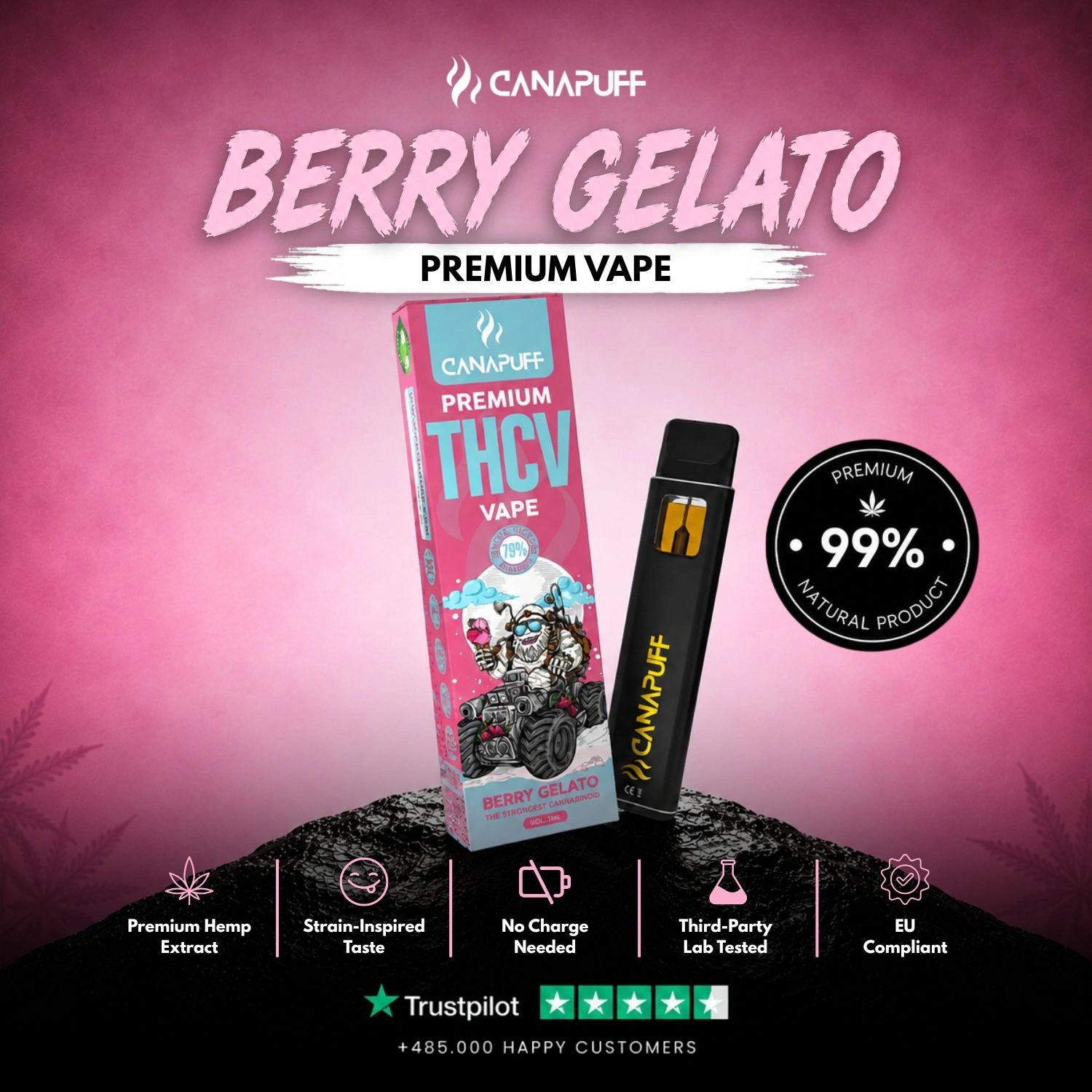
- You might look for cannabis strains or cannabis products that highlight THCV content - for example Berry Gelato 50 THCV Flowers.
- THCV is described as less psychoactive at low doses, but research is limited.
- For example you may explore specialized products or check the product label for THCV content.
Practical pointers
- Always check the cannabinoid profile of "cannabis strains" or "cannabis products" so you know THCV vs THC content.
- Because less research exists on THCV, its properties are less well known than those of THC.
- Be aware of individual differences: metabolism, tolerance, previous experience with plant Cannabis sativa - all matter.
- If you have questions about your health, consult a doctor before using THC or THCV products.
- Check the rules in your country (see next section).
How Are THC and THCV Regulated, and What Are the Risks?
Regulation of THC
- THC (especially delta 9 THC) is classified as a controlled substance in many countries, because it is psychoactive and can be misused.
- Even where cannabis is permitted for some purposes, there are strict rules for THC content and for licences to produce or sell it.
Regulation of THCV
- THCV is a minor cannabinoid. Its status is not clearly defined in some countries, and the rules are changing quickly.
- Some countries classify "THC-like compounds" or "THC analogues" as controlled substances, even if the compound is chemically different. Caution is needed.
- Always verify local rules for cannabis products, hemp plants, and cannabinoid content.
Risks and possible side effects of THC and THCV
- THC: psychoactivity, cognitive impairment, increased heart rate, nervousness or paranoia in some people.
- THCV: early studies report fewer psychoactive reactions at lower doses, but side effects such as dizziness, dry mouth and increased heart rate have been reported.
- There is very little long-term human data for THCV. More research is needed on its risks and dose ranges.
- Combinations of THC and THCV: THCV may reduce some THC-related cognitive reactions, but this is not certain.
Important caution
- Because both THC and THCV act on the central nervous system and endocannabinoid system, individuals with certain health conditions (cardiovascular, psychiatric, metabolic) or those taking medications should consult a healTHCare professional.
- Be careful with newer compounds such as THCV, because little is known about them.
- Do not use controlled substances where they are not permitted.
How Should You Think About THC and THCV in Practice?
Questions to ask yourself before use
- Is the product permitted in my country?
- Is the product psychoactive, and can I avoid driving and other risky activities after use?
- What is the cannabinoid profile of the product I'm considering? Is it THC-dominant or does it emphasise THCV (or other minor cannabinoids)?
- Does the label show the THC and THCV content, and is there a lab report?
- Do I take pharmaceuticals or have conditions that make THC or THCV unsuitable? If yes, consult a doctor first.
- Do I understand that research on THCV is limited?
Practical example
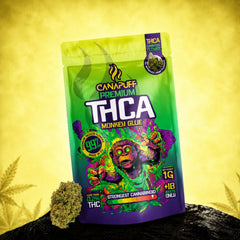
If you want to see a product with a higher THCV content, look at the cannabinoid profile on the label (for example: Canapuff THCV flowers).
THC-dominant products are, for example, THC cookies or THC gummies. These products are psychoactive and only permitted in some countries.
Combining THC and THCV
Some products contain both THC and THCV. Some studies suggest that THCV may reduce some THC-related reactions (for example the increase in heart rate or memory effects) when both are used together.
However:
- Any combination should be approached cautiously.
- Little is known about such combinations, especially at different doses.
- If you have questions about your health, always consult a qualified doctor.
What Does Current Cannabis Research Tell Us - and What Are the Gaps?
What we know
- Research has begun to reveal that THCV has distinct pharmacological activity compared with THC, including different binding at CB1 and CB2 receptors.
- Small human pilot studies have measured blood glucose and lipid values after THCV. These studies are too small for conclusions.
- Comparisons of THCV vs THC show differences in food intake: THC often increases hunger, while THCV has been studied for the opposite effect in some contexts.
What we still don't know
- Long-term studies in humans with large sample sizes are lacking, especially for THCV.
- Dose ranges for THCV are not yet well defined.
- The risk profile of THCV (especially in vulnerable groups) is not well established.
- More research is needed to understand how cannabis strains rich in THCV perform in real-world consumer use, how combinations of cannabinoids behave, and how different genetic backgrounds affect outcome.
- Regulatory frameworks in many regions lag behind the science, which makes standardisation and consumer information difficult.
Are There Specific Considerations When Choosing Cannabis Products?
Here are some practical considerations when selecting cannabis products with THC or THCV:
- Label transparency: Ensure the product clearly lists cannabinoid content (THC, THCV, other cannabinoids).
- Strain information: If you're using a flower or whole-plant product from Cannabis sativa, check whether the strain has higher THCV content or is typical for THC dominance.
- Content: Check how much THC and THCV a product contains, especially if you are not familiar with THCV.
- Psychoactivity: THC is psychoactive. THCV is described as less psychoactive at low doses, but research is limited.
- Rules: Check the local rules on THC content, THCV and cannabis products in your country or region.
- Individual variation: Tolerance, metabolism, previous exposure to cannabis all affect outcomes. What works for one person may not work the same for another.
Summary: What Should You Take Away?
- THC and THCV are both cannabinoids from the plant Cannabis sativa, but they differ in their molecular structure, receptor interaction and psychoactivity.
- THC is the classic psychoactive cannabinoid: it activates CB1 receptors strongly and is abundant in many cannabis strains.
- THCV is rarer, has a shorter side chain and interacts differently with the endocannabinoid system (often blocking CB1 at lower doses). Research on THCV is at an early stage.
- Specific THC preparations are approved as pharmaceuticals in some countries. For THCV, research is limited and no health claims can be made.
- Rules, product content and risks all matter. More human research is still needed, especially for THCV.
- When you compare cannabis products, check the cannabinoid content, look for transparent labelling and read the lab report.
Final Thoughts
Understanding the difference between THC and THCV is important if you want to read product labels and research reports correctly. The two compounds differ in how they interact with the endocannabinoid system, in their psychoactivity and in how common they are in cannabis strains.
As interest grows in minor cannabinoids such as THCV, buyers will need accurate information, clear labels and knowledge of the local rules.
If you are interested in exploring specific cannabis-derived products, you might consider visiting https://www.canapuff.com/ for product options and educational resources.
Ready to explore options tailored to your preferences? Visit Canapuff to browse curated cannabis products including THC- and THCV-rich formulas.
Works Cited
Abioye, Amos, et al. "Δ9-Tetrahydrocannabivarin (THCV): a commentary [...]." Journal of Cannabis Research, vol. 2, 2020. "THCV vs. THC: What Are the Differences?" Technology Networks. "Tetrahydrocannabivarin (THCV)." WebMD. "What Is THCV and How Does It Differ from THC?" MyPureOasis.com. "The role of tetrahydrocannabivarin (THCV) in metabolic [...]." PMC.